Alan fires a bullet from his hand gun and his friend Wade catches the bullet with his bare hands. The gun shoots actual, deadly bullets. The bullet does not touch anything but air after it leaves the gun and until it reaches Wade’s hand. Wade is uninjured. How does he do it?
Alan fires his bullet from a .25 ACP (Automatic Colt Pistol), which will reach a maximum height of 2,287 feet. He shoots directly upward while standing at the base of Burj Khalifa, a 2,722 foot tall building.
Wade is a window cleaner at that building, waiting at 2,287 feet. When the bullet reaches that height and is about to go back down again, he reaches out with his bare hands and catches it.
A seed. One seed turns into a plant or tree and seemingly disappears. When a plant dies, the seeds can be harvested to create new plants. From a single seed, hundreds more are created, vastly exceeding the original. Gardeners care for plants on bent knee and each new plant helps make the air fresher.
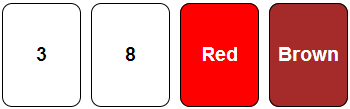
Four cards are placed in front of you on the table, each with a number on one side and a color on the other. The visible cards show 3, 8, red and brown. Which cards should you turn over in order to test the truth of the statement that if a card shows an even number on one face, then its opposite face is red?
You’d need to turn over only the 8 and brown card. Only a card with an even number on one face and which is not red on the other face can invalidate the stated rule. If you turn over the 3 card and it’s not red, it doesn’t invalidate the rule, nor does turning over the red card and finding it has the label 3.
This test was devised by Peter Cathcart Wason and is known as the Wason selection task. Less than 10% of test subjects got it correct in two separate studies.
Willow’s keyboard is acting up. The a, e, i, o and u keys don’t work and the space key is misbehaving as well. Can you decipher these common sayings they typed?